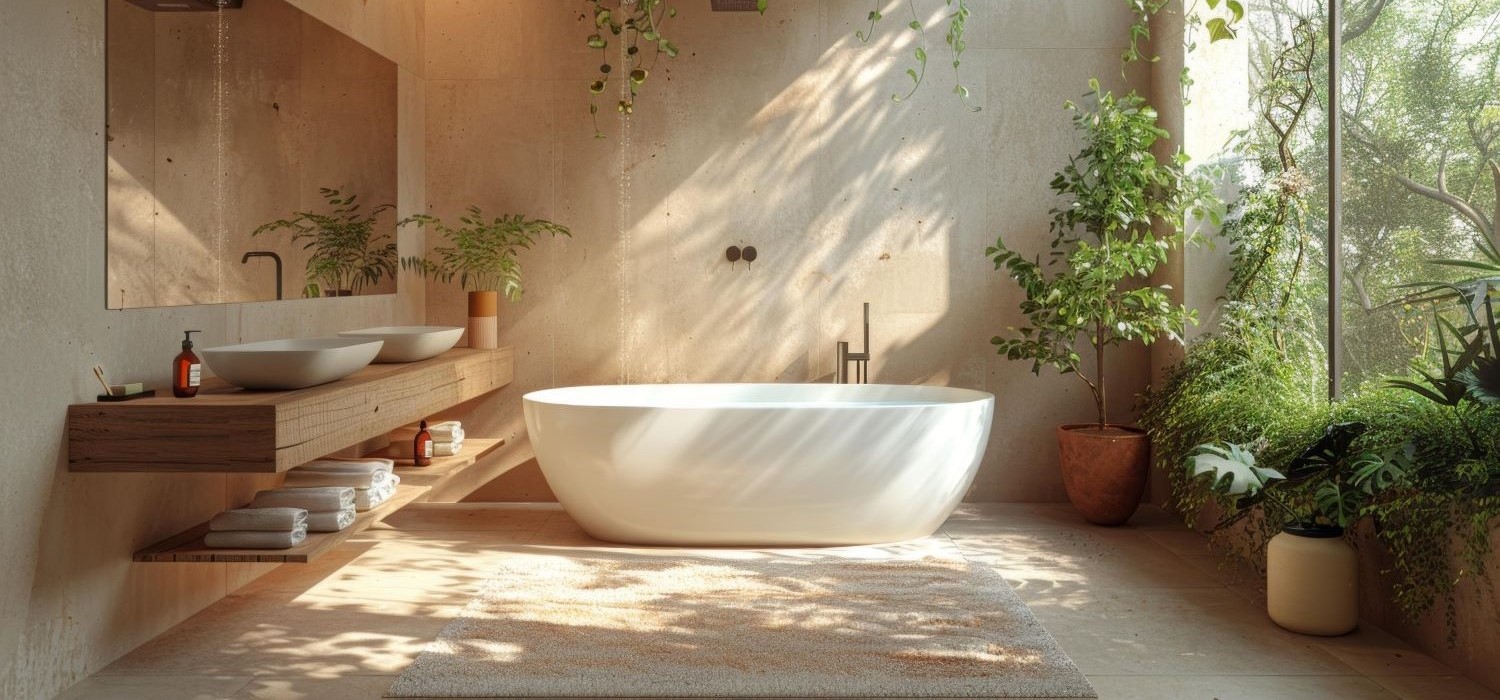
Designing a new bathroom is an exciting and often much-needed home improvement project. However, as with any renovation, it comes with environmental impacts. From the materials you choose to the energy your bathroom consumes, every decision can either increase or decrease your carbon footprint. But don’t worry—there are many ways to make your bathroom not just a sanctuary for relaxation but also a space that reflects your commitment to sustainability. Here’s how you can offset your carbon footprint when designing your new bathroom.
Bathroom Carbon Footprints
The global concern about climate change and environmental degradation has made it essential for homeowners to think more sustainably. Bathrooms, while being essential spaces, can be heavy on resources like water, energy, and materials. Whether you’re planning a small upgrade or a full redesign, making eco-friendly decisions can help reduce your carbon footprint. This blog will walk you through some smart strategies to create a greener bathroom without compromising on style or comfort.
Buy Locally
When sourcing materials for your bathroom, buying locally can significantly reduce your carbon footprint. The transportation of materials over long distances adds a considerable amount of CO2 emissions. By purchasing from local manufacturers and suppliers, you not only support the local economy but also cut down on the energy used for transportation.
Local artisans and suppliers often produce high-quality, unique items, such as tiles, vanities, or fixtures, that will give your bathroom a bespoke feel. Moreover, many local suppliers are likely to be more transparent about the sourcing of their materials, giving you the opportunity to choose sustainable and eco-friendly products.
Recycle
Incorporating recycled materials into your bathroom design is another powerful way to reduce your environmental impact. This can be done in a number of ways, from using recycled glass or tiles for your countertops to installing fixtures made from reclaimed wood or metal. Recycled materials often have unique textures and appearances, adding character to your bathroom while being gentle on the planet.
Additionally, when demolishing your old bathroom, consider salvaging materials that can be reused elsewhere, either in your home or for other projects. Recycling not only reduces waste sent to landfills but also decreases the demand for new, resource-intensive materials.
Energy-Efficient Fuel for Your Home
Heating water accounts for a large portion of energy usage in the home, and bathrooms are the biggest water consumers. Opting for energy-efficient heating solutions can have a massive impact on your carbon footprint. Installing energy-efficient boilers, solar water heaters, or heat pump systems can significantly reduce the amount of energy your bathroom consumes.
Another option is to install a tankless water heater. Unlike traditional water heaters that keep a reservoir of hot water ready at all times, tankless models heat water on demand, reducing energy waste. Pair this with water-saving showerheads or faucets, and you’ll further minimize your overall energy consumption.
To Bathe or to Shower?
The classic question: is it more eco-friendly to take a bath or a shower? Generally speaking, a short shower uses less water than a bath. However, long showers can quickly surpass the water usage of a bath. If you’re really trying to reduce your carbon footprint, opt for showers and limit them to five minutes or less.
If you’re more of a bath person, you can still minimise your water use by installing a smaller bathtub or one with a lower water capacity. Another tip is to avoid filling the tub to the brim and to use warm, rather than hot (remove comma)water to conserve energy.
Dual Flushes
Toilets are another major source of water consumption in the bathroom. Installing a dual-flush toilet allows you to use a higher or lower water volume depending on your needs. These toilets typically use around 6 litres of water for a full flush and 3 litres for a half flush, compared to traditional toilets that can use up to 13 litres per flush.
By choosing a dual-flush system, you can save thousands of litres of water per year, which not only helps the environment but also reduces your water bill. Additionally, you might consider toilets with built-in bidets to further reduce water and toilet paper consumption.
Plant Trees
Offsetting your carbon footprint can extend beyond your bathroom walls. One of the most effective ways to offset carbon emissions is by planting trees. Trees absorb carbon dioxide from the atmosphere, making them a natural and sustainable way to reduce the overall impact of your renovation.
Many companies and organisations offer tree-planting programs that allow you to contribute to reforestation efforts. Some even calculate the number of trees required to offset the carbon footprint of specific activities, including home renovations. You can also consider planting greenery in your garden to further contribute to carbon sequestration.
Encourage Upcycling
Upcycling, or creatively repurposing old materials, is another excellent way to lower your carbon footprint while adding unique character to your bathroom. For example, an old wooden door can be turned into a bespoke vanity or shelving unit. Antique mirrors, reclaimed wood, and repurposed storage solutions can all be incorporated into your bathroom design, making it a space that’s both stylish and sustainable.
Upcycling is also a fantastic way to reduce the amount of waste sent to landfills, giving new life to old items that might otherwise be discarded. Plus, it’s a great way to add a personal touch to your bathroom, ensuring your space is one-of-a-kind.
Conclusion
Designing a bathroom with sustainability in mind is not only good for the environment but also creates a space that reflects your values. From buying locally and using recycled materials to conserving water and energy, there are countless ways to reduce your carbon footprint during your renovation.
By making small, conscious decisions, you can create a beautiful, functional bathroom that minimises its impact on the planet. Whether it’s choosing a dual-flush toilet, taking shorter showers, or incorporating upcycled items, these strategies will help you design a bathroom that’s both eco-friendly and luxurious